
The First Time I Realized Narrative Controls Everything
The first time I realized narrative controls everything did not happen during a branding session or a moment of business clarity. It happened while I was downsizing my life. I was in the middle of releasing almost everything I owned. When life breaks open, there is often a strange urge to simplify. Objects begin to feel like stories we are ready to set down. As I moved through boxes and bags from different chapters of my life, I came across something that made me pause.
It was a bag covered in roses from the perfume I had been named after.
Chloé
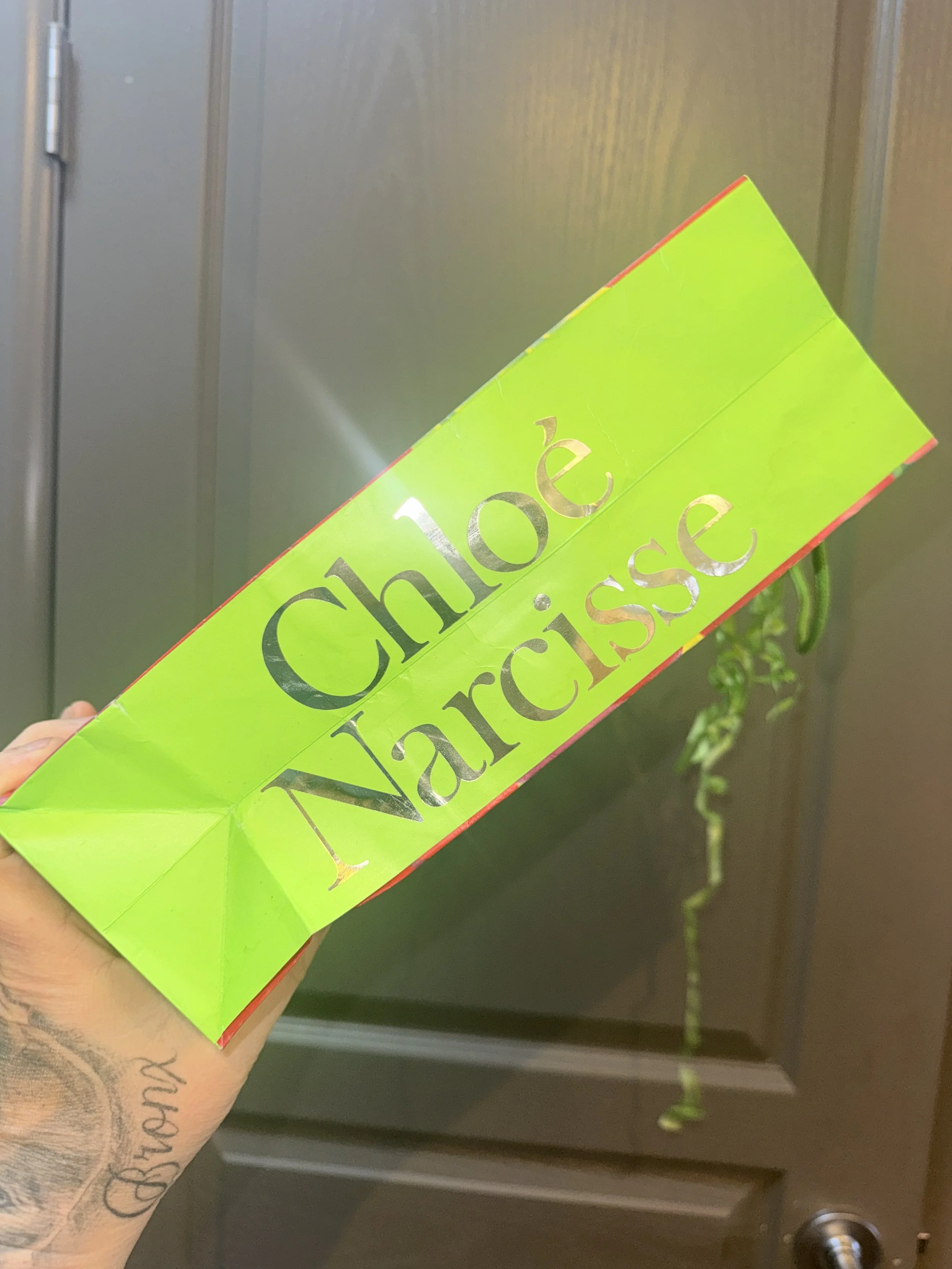
The bag I found while releasing pieces of my life.
Narcisse refers to the narcissus flower, long associated with self-reflection and awakening. In mythology, Narcissus saw his own reflection and became captivated by it, which is where the word narcissism eventually comes from, making the flower a symbol of reflection, identity, and seeing oneself clearly.
I had been told that story many times growing up. It was not new information. Yet something about seeing the bag in that moment, while I was actively rebuilding my life and searching for purpose, made the realization land differently. It was as if a quiet thread had been running through my life the entire time, waiting for me to finally notice it.
Identity can begin forming long before we understand it.
Names carry meaning. Expectations carry meaning. Family stories carry meaning. Sometimes those meanings become identities that are placed on us before we ever have the chance to decide who we actually are.
As a child, I was someone who spoke the things other people did not say out loud. I noticed patterns in conversations, emotional dynamics in rooms, and inconsistencies in what people said compared to what they did. At the time I did not have language for intuition. I only knew that I could feel when something was true or when something was being avoided.
When I spoke those observations, the response was rarely conversation.
It was silence.
Silence can be one of the most powerful forms of social feedback a child receives. It quietly teaches you which parts of yourself are welcome and which parts are not.
For me, shame began appearing in more explicit ways as I grew older. I remember learning that my father and his girlfriend had made a bet that I would become pregnant at sixteen. I also remember writing letters to my family asking for emotional support and caregiving, trying to explain how I felt and what I needed.
Those letters were never answered.
Looking back, I can see how those moments shaped the early narrative of my life. When a child’s attempts to communicate truth are ignored or dismissed, they often begin to question their own perception. The instinct to speak honestly becomes tangled with the fear of being misunderstood or rejected.
For a long time I believed the issue was that I needed to learn how to tell the truth more clearly.
At one point in my life, someone told me something simple that stayed with me.
“You just need to tell the truth.”
At first I interpreted that as instruction. I thought it meant I had not been honest enough. But over time something inside me began to shift. I realized I had been telling the truth all along. The problem was not the truth itself.
The problem was the narrative that had already been constructed around me.
When a story about a person is created early enough, it can become difficult for others to see anything outside of it. The narrative acts like a lens that shapes how every action, word, or behavior is interpreted.
Understanding this changed everything for me.
I realized that narratives are not permanent structures. They are frameworks that can be examined, dismantled, and rewritten.
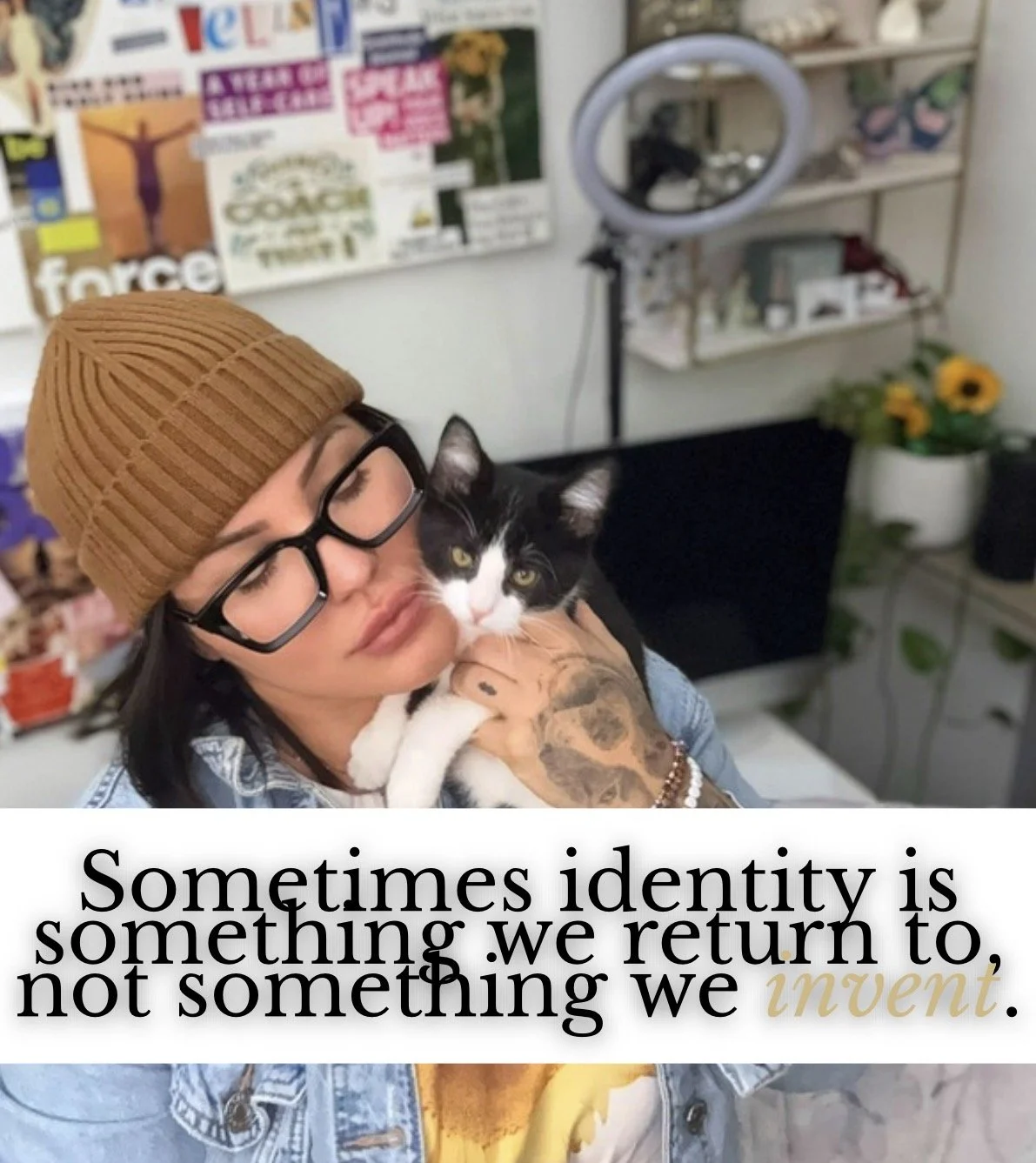
As I stripped away identities that had been handed to me, I noticed something surprising. I did not feel like I was inventing a new version of myself. Instead, it felt like I was returning to something that had always existed underneath the noise.
Clarity.
Pattern recognition.
Truth.
Those qualities eventually became the foundation for the work I now do through Vision Witch Creative.
A Vision Witch is not someone who predicts the future. It is someone who recognizes patterns and helps others see what already exists beneath the surface. Throughout history, the people labeled as witches were often the ones who noticed connections others ignored and spoke truths that disrupted comfortable narratives.
Today that ability shows up in many forms. For me, it shows up in the way I help people build brands.
Because branding, at its core, is not about marketingtricks or visual aesthetics. It is about narrative architecture. It is the process of consciously shaping the story that people step into when they encounter your work.
Too many people build brands disconnected from their authentic voice because they believe they must follow someone else’s strategy or formula. Over time this creates businesses that feel forced, fragmented, and exhausting to maintain.
Vision Witch Creative exists to offer another path.
My work helps people create from their authentic connection to themselves. Instead of forcing identity into a brand, we uncover the deeper narrative that is already present and bring it into form.
In many ways, the bag covered in roses from the perfume I was named after was a small symbol of a larger realization.
The stories we inherit are not always the stories we are meant to live.
Sometimes the most powerful thing we can do is strip everything back to the truth of who we are and begin again from there.
That is where vision begins.
& from vision, everything else can be built.
Explore Vision Witch Creative
